Juniper Ssl Vpn Virtual Appliance

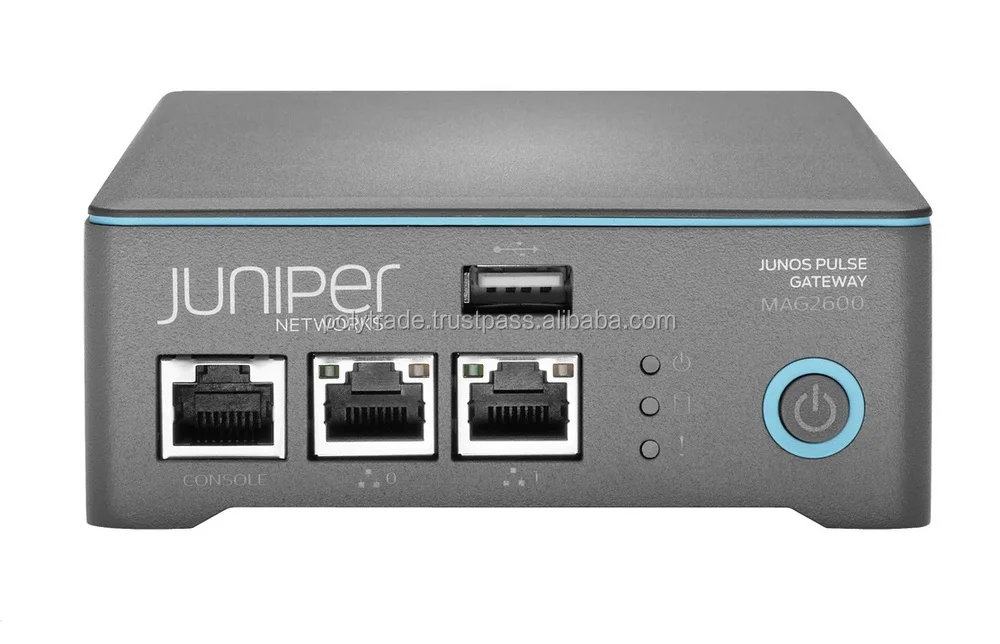
Company Case Studies Pulse Secure - Juniper Networks. SSL VPN Virtual Appliances. SSL VPN Virtual Appliances. Support for SSL VPN Virtual Appliances. Expert Karen Scarfone examines the top SSL VPN products available. Their SSL VPN as a virtual appliance. Include Cisco IOS SSL VPN and Juniper.
3d Studio Max Design 2010 Free Download there. • • Enterprise VPN Solutions Comparison There are a number of different solutions on the market today which offer Virtual Private Network (VPN) functionality. Sometimes these solutions are included as part of a comprehensive suite of solutions and other times, they are offered as standalone products. This article will take a look at the top five enterprise VPN solutions available today. F5 Networks VPN Solutions The F5 Networks VPN solution was once offered both as a standalone product and as a part of a comprehensive suite. However, following the recent reorganization, it seems that F5 is looking to push only the offering that is part of the BIG-IP and Viprion comprehensive products. Whether this is a problem or not depends on the specific implementation, but it seems that the standalone VPN appliance may be at the end of its deployment life. F5's specific software module that includes VPN functionality is the Access Policy Manager (APM).
This module includes a lot of different functions, including the ability to connect through the deployed appliance using F5's BIG-IP Edge Client. This client is offered for all common desktop and mobile platforms. The amount of performance offered depends on the specific platform that the module is deployed on. Panasonic Pk 957 Manual.
The BIG-IP Edge VPN Client uses TLS (transport layer security) and DTLS (datagram TLS) for its connection from the client to the appliance, allowing for delay sensitive and delay insensitive appliances to run without problems. F5's BIG-IP and VIPRION offerings are quite wide in terms of range of available processing power. The BIG-IP appliances are individual appliances with static hardware specifications which can be sized depending on the specific implementation. F5's Viprion is a blade based platform that offers options for very large implementations.
Finding specific VPN statistics using F5 resources however, has proven to be challenging as none of these types of statistics are commonly promoted in their data sheets. Nevertheless, here are some of F5's devices and the relevant information. F5's physical appliances start at the BIG-IP 1600 and go up to the BIG-IP 11050, which is their largest standalone appliance. F5's largest blade option is the Viprion 4800 Chassis, which offers up to eight blades, each of which offer the following specifications: Included/Maximum SSL Transactions per Section (TPS) F5 BIG-IP 1600 500/1,000 F5 BIG-IP 11050 500/20,000 F5 Viprion 4800 Chassis (4340N Blade) 12,000/30,000 F5 also offers virtual appliances which are able to run the same modules as the physical appliances including the APM used for VPN. Keep in mind as well that the pricing for these appliances is based on the customer using these devices not just for VPN, but also as Appliance Delivery Controllers (ADC). Cisco VPN Solutions Like F5, Cisco's VPN solution is based on a number of products that offer more than VPN termination.
The AnyConnect Secure Mobility Client is the main piece of software sitting in the middle of Cisco's VPN solution. It is able to be run on all common desktop and mobile operating systems and offers not only support for VPNs, but also other security functionality.
For Cisco's VPN functionality, AnyConnect offers support for TLS, DTLS and IPsec IKEv2; these support the majority of traffic types that would typically be supported over remote connections. The AnyConnect client must of course be supported by a backend VPN termination solution; for this it uses either a model from the ASA 5500-X series or a Cisco IOS device running version 15.1(2)T or higher (although limited in client functionality). This second group of devices allows the client to be used in an expansive number of reasonably priced devices providing the ability to support VPN termination on a very small scale. On a smaller sized platform, Cisco's 1941, 2900 and 3900 series platforms all support hardware acceleration for DES, 3DES and AES for both IPsec and SSL VPNs.