Aaron Copland At The River Pdf Merge
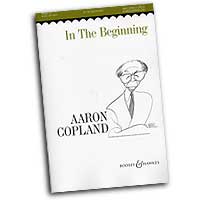

Copland, Aaron: Old. Abbreviations (PDF) Territory. At the River is an arrangement of the beloved 1865 hymn tune by Robert Lowry. Download Aaron Copland At The River Pdf Merge Traditional Hymn Tune. The complex harmony in the accompaniment adds to the beauty of the stately, yet gently, measured. Buy At the River (SATB ) by Aaron Copland at jwpepper.com. Choral Sheet Music. Powerful and rhythmic, this number also serves as a classic example a.
Aaron Copland as subject of a, 1970 Born ( 1900-11-14)November 14, 1900 Brooklyn, New York, United States Died December 2, 1990 ( 1990-12-02) (aged 90) Sleepy Hollow, New York, United States Education, Notable work,,,,, Aaron Copland (; November 14, 1900 – December 2, 1990) was an American composer, composition teacher, writer, and later a conductor of his own and other American music. Copland was referred to by his peers and critics as 'the Dean of American Composers.' The open, slowly changing harmonies in much of his music are typical of what many people consider to be the sound of American music, evoking the vast American landscape and pioneer spirit. He is best known for the works he wrote in the 1930s and 1940s in a deliberately accessible style often referred to as 'populist' and which the composer labeled his 'vernacular' style. Code Licensing Mechanic Registry V5.0 there. Works in this vein include the ballets, and, his and.
In addition to his ballets and orchestral works, he produced music in many other genres including chamber music, vocal works, opera and film scores. After some initial studies with composer, Copland traveled to Paris, where he first studied with and, then with noted.
He studied three years with Boulanger, whose eclectic approach to music inspired his own broad taste. Determined upon his return to the U.S. To make his way as a full-time composer, Copland gave lecture-recitals, wrote works on commission and did some teaching and writing. Idm 6.14 Full Version For Windows 7. He found composing orchestral music in the style he had adapted abroad a financially contradictory approach, particularly in light of the. He shifted in the mid-1930s to a more accessible musical style which mirrored the German idea of ('music for use'), music that could serve utilitarian and artistic purposes. During the Depression years, he traveled extensively to Europe, Africa, and Mexico, formed an important friendship with Mexican composer and began composing his signature works.